Call (862) 356-5608

Figures checked October 30, 2026

Restaurant profit margin (2026): averages by type and per order

The typical restaurant keeps less than 5 cents of every sales dollar. The National Restaurant Association's 2025 median is 2.8% before tax for full-service and 4.0% for limited-service.

One-minute answer

  • Median restaurant margin before tax: 2.8% for full-service and 4.0% for limited-service (National Restaurant Association, 2025, more than 900 restaurants).
  • Where a typical dollar goes: about 33 cents to food and drink, 33 cents to labor, 29 cents to everything else, and roughly 5 cents of pre-tax profit (NRA).
  • Restaurant expenses rose about 36% from 2019 to 2026 (NRA estimate), so a small cost slip can erase the whole margin.
  • Toast and Restaurant365 publish 3% to 5% for full-service and 6% to 9% for fast casual. Neither page names a primary source for those ranges.
  • On a $35 order, a 25% delivery app plan takes $8.75. That is $7.43 more than a normal card fee, and more than four times the $1.75 a 5% margin leaves.
  • App pickup (6% on DoorDash, 7% on Uber Eats) still leaves a profit. Your own ordering site leaves the full margin, minus only the card fee.
  • Disclosure: Orderitto publishes this page. Orderitto sells online ordering with zero per-order commissions. Every outside figure links to the page it was read from.
Three restaurant staff in aprons sitting at a cafe table, talking over a laptop and a notebook
Your margin is one number on your profit and loss statement. The sections below show how yours compares and which line moves it most. Photo: Ketut Subiyanto on Pexels.

Average restaurant profit margin by type

What each type of restaurant keeps, and who says so

The National Restaurant Association (NRA) surveys real operators. Its public summary gives medians for two groups only. Toast and Restaurant365 publish wider ranges by type. We show all three side by side, read on October 30, 2026, so you can see which number comes from where.

Restaurant profit margin by type from three sources
Restaurant typeNRA 2025 (median, before tax)Toast (July 28, 2026)Restaurant365 (updated Oct 28, 2026)
Full-service (table service)2.8% median3% to 5%3% to 5%
Limited-service (counter, quick service, fast casual)4.0% medianQuick service 6% to 9%; fast casual 6% to 9%Fast casual and quick service 6% to 9%
Fine diningNot in the public summary4% to 9%Counted in full-service, 3% to 5%
Food trucksNot in the public summary6% to 9%Not listed
CateringNot in the public summaryNot listed7% to 8%
All restaurantsRoughly 5% for a typical restaurant (NRA inflation page)3% to 5% average; 0% to 15% rangeNot given as one figure

Scroll the table sideways on a phone. The NRA figure is income before taxes. Toast and Restaurant365 say “net profit margin.” The full NRA Abstract ($99 for members, $199 for nonmembers) breaks results down by check size, sales volume, location and community size. We used only what the NRA makes public.

Why the NRA number is lower

A median is the middle restaurant in the survey, not a target. About half of the full-service restaurants in the NRA data kept 2.8 cents or less per dollar before tax. The 3% to 9% ranges describe what Toast and Restaurant365 call typical or healthy, not what the middle operator earned.

Why limited-service keeps more

Labor is one reason. The NRA says payroll and benefits were a median of 36.5% of sales at full-service restaurants. Restaurant365 points to lower labor and faster table turns at counter-service concepts.

Why restaurant margins are so low

Where a typical restaurant dollar goes

The NRA's inflation page breaks a typical sales dollar into four parts. Food and labor take about two thirds. Rent, utilities, supplies, repairs and card fees take most of the rest. About 5 cents is left before tax.

  • 33¢ Food and beverage
  • 33¢ Labor
  • 29¢ Everything else
  • 5¢ Pre-tax profit
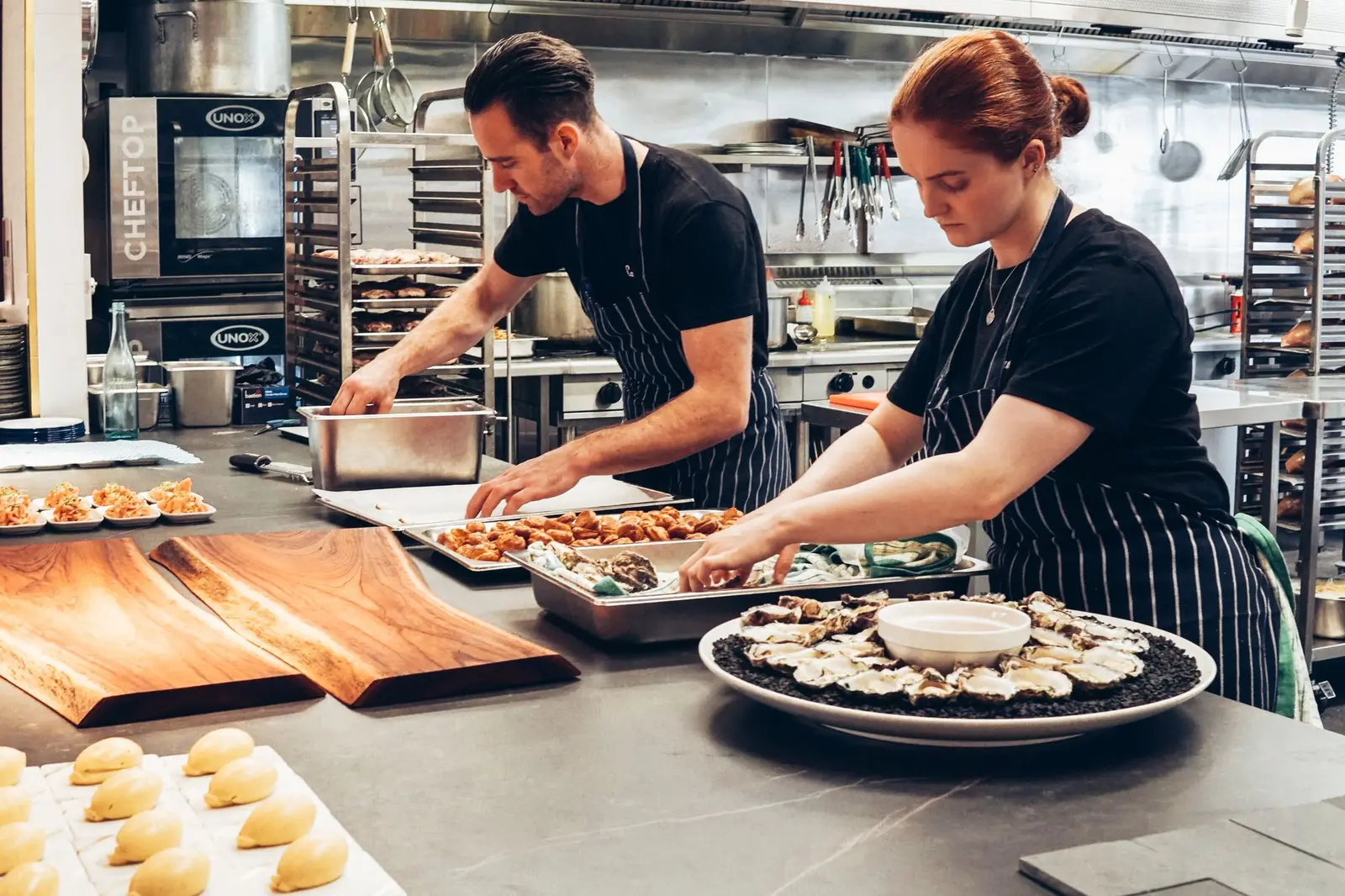
Two cooks in striped aprons plating dishes side by side at a steel counter in a restaurant kitchen
Food and labor meet on the line: together they take about two thirds of each sales dollar. Photo: Elle Hughes on Pexels.

The formula

How to calculate your restaurant profit margin

Use the same months for every number. A full year evens out slow seasons.

Net profit margin

Net profit ÷ total sales × 100. Net profit is sales minus every cost: food, labor, rent, utilities, repairs, card fees, marketing and delivery app commissions. Example: $1,000,000 in sales and $28,000 in pre-tax profit is a 2.8% margin, the NRA's full-service median.

Gross profit margin

(Sales − food and beverage cost) ÷ sales × 100. It shows how well your menu is priced against ingredients. At the NRA's typical 33 cents of food cost per dollar, gross margin is about 67%.

Prime cost

(Food and beverage cost + labor) ÷ sales × 100. The NRA's 2025 median for limited-service was 65 cents per dollar. Toast calls keeping it near 60% a widely used benchmark.

Before tax or after tax

The NRA reports income before taxes. If you compare your own number with it, use your pre-tax profit, not what is left after income tax.

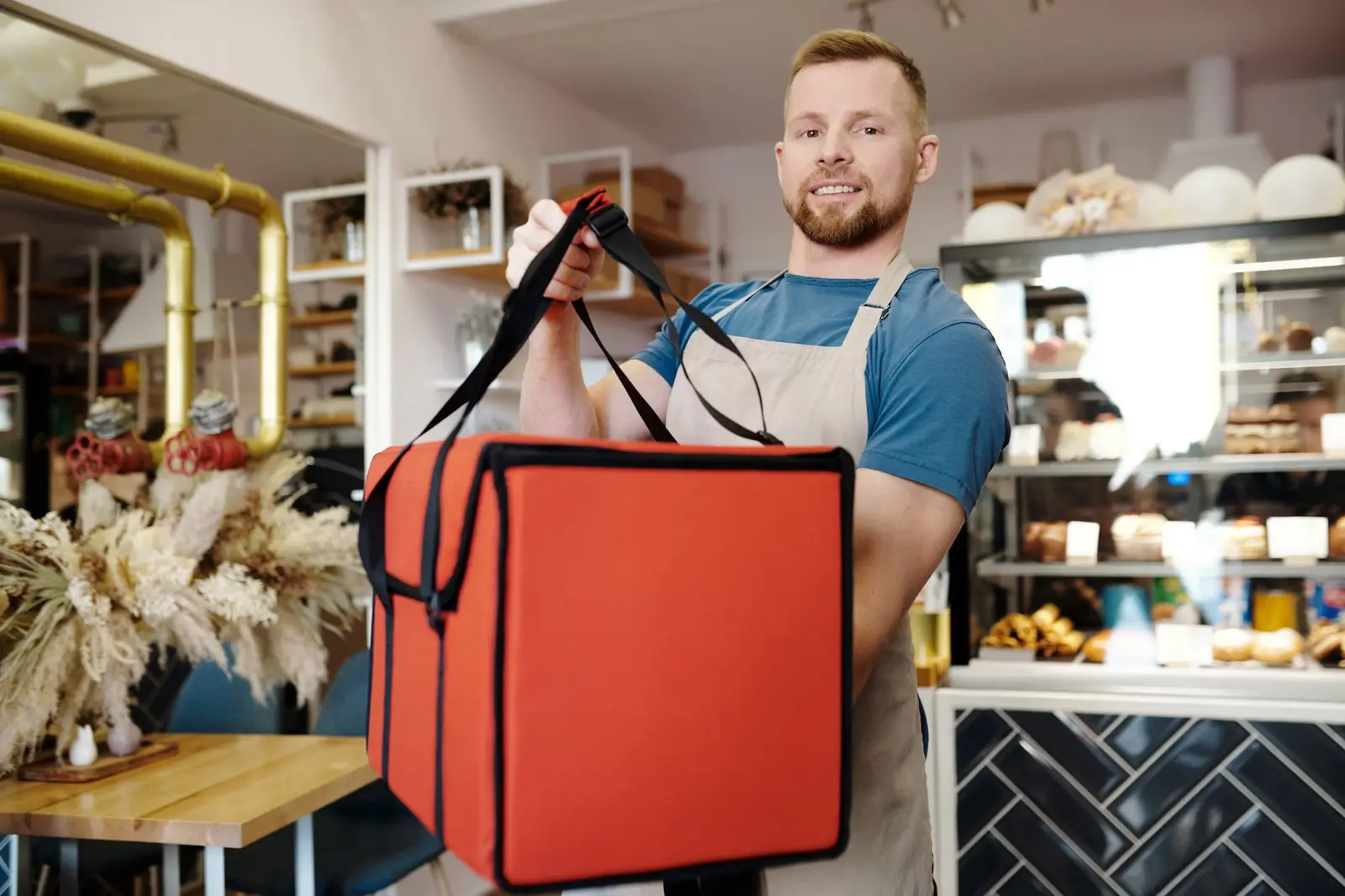
Smiling restaurant worker in an apron holding up a red insulated delivery bag inside a cafe
The same bag of food can earn a profit or lose money. The channel it was ordered through decides. Photo: Norma Mortenson on Pexels.

Profit per order, by channel

What one $35 order leaves you on each ordering channel

Start with the NRA's typical 5% margin: $1.75 on a $35 order. That margin already pays a normal card fee, which on Stripe's 2.9% + 30¢ is $1.32. Anything a channel charges above $1.32 comes out of the $1.75. Rates are each company's own published rates, read on October 30, 2026. The $35 order and the 5% start are our example.

Fee and profit left on a $35 order by ordering channel
ChannelProfit left of $1.75Fee on $35Fee as % of orderWhat the fee is
Your own ordering site, pickup (card paid through Stripe)$1.75$1.323.8%Only the card fee you pay on every card sale. The site's flat monthly plan is not charged per order.
DoorDash pickup$0.97$2.106%6% on every DoorDash plan, if your pickup menu prices match in-store prices.
Uber Eats pickup$0.62$2.457%7% with validated in-store pricing; 10% without it.
DoorDash Basic delivery−$2.18$5.2515%DoorDash says its commission covers card processing, so the $1.32 card fee is credited back.
Uber Eats Lite delivery−$3.93$7.0020%Lite starts at 15% in New Jersey and 12 other listed markets.
Grubhub Basic + Grubhub Delivery−$3.55$6.6218.9%5% marketing commission + 10% delivery fee + $0.30 + 3.05% processing.
DoorDash Plus or Uber Eats Plus delivery−$5.68$8.7525%Uber Eats Plus adds 5% on Uber One members' orders.
DoorDash Premier or Uber Eats Premium delivery−$7.43$10.5030%The highest published delivery plans on both apps.
Grubhub All-access + Grubhub Delivery−$8.80$11.8733.9%20% marketing commission + 10% delivery fee + $0.30 + 3.05% processing.
Your own site, delivered by Uber Direct−$6.24 before any delivery fee you charge$9.3126.6%Card fee + Uber Direct from $7.99. On your own site you set the guest's delivery fee, so a $7.99 fee brings you back to $1.75.

Scroll the table sideways on a phone. The math treats every order as costing the same food, labor and overhead. It leaves out ads, promotions, tablet fees and any menu markup you set on the apps.

What the table shows

Pickup through an app still leaves most of the margin. Delivery through an app, at any published plan, turns a typical $35 order into a loss before ads or promotions. Your own site keeps the full $1.75 on pickup, and on delivery you choose the guest's delivery fee.

The fair case for the apps

DoorDash's pricing page answers “30% commission will kill my margins” with “This is the right question to ask.” It argues that many app orders come from guests who would never have found you. Then the real choice is a thin order or no order. That holds for new guests. It does not hold for regulars who would have ordered from you directly.

Restaurant profit margin calculator

Run your own numbers

Start with the NRA's typical cost split, then type in your own. With $1,000,000 in sales and 15% of it on a 25% delivery plan (our example), profit falls from $50,000 to about $18,136. That is a 5.0% margin becoming 1.8%.

NRA typical: about 33%.

NRA typical: about 33%.

Rent, utilities, supplies, repairs, card fees. NRA typical: about 29%.

Our example: 15%. Use your own app payout reports.

DoorDash Plus and Uber Eats Plus delivery: 25%.

Sets the 30¢ part of the card fee the commission replaces.

Profit before app fees

$50,000

A 5.0% margin, before tax, with your cost split.

Extra cost of app orders

$31,864

$37,500 in commission, minus $5,636 of card fees you would pay anyway (Stripe 2.9% + 30¢ on about 4,286 orders).

Profit after app fees

$18,136

A 1.8% margin. Every app order moved to your own site at card fees only puts its share back.

This is a planning estimate, not accounting advice. It treats app orders as costing the same food, labor and overhead as your other orders. It leaves out ads, promotions and tablet fees.

How to improve your restaurant profit margin

Eight ways to raise your margin without guessing

Each one ties to a number in this guide, so you can check whether it worked.

1. Know your number every month

Close each month with net profit ÷ sales. Compare it with your type's median: 2.8% full-service or 4.0% limited-service before tax (NRA, 2025).

2. Watch prime cost first

Food plus labor is the biggest line on the bill. Track it as one percent of sales against the NRA's 65-cent limited-service median, or Toast's near-60% benchmark.

3. Price each channel on purpose

DoorDash's 6% pickup rate requires pickup menu prices that match in-store prices. Uber Eats charges 7% on pickup only with validated in-store pricing, 10% without. DoorDash also says you can set different prices for delivery orders.

4. Pick the lowest app plan that still brings new guests

Published delivery plans run 15%, 25% and 30% on DoorDash and 20%, 25% and 30% on Uber Eats. Uber Eats Lite starts at 15% in New Jersey. Every 5 points less keeps $1.75 more on a $35 order.

5. Move regulars to your own ordering site

A guest who already knows you does not need an app to find you. On your own site, the per-order cost is the card fee: Stripe's 2.9% + 30¢ is $1.32 on a $35 order.

6. Control your own delivery fee

Uber Direct delivers orders from your own website from $7.99 a delivery. Uber says you set the delivery fee guests pay on your site. Charge enough to cover the courier.

7. Plan for rising costs

The NRA estimates restaurant expenses rose 36% from 2019 to 2026. Review menu prices against food cost on a schedule, not only when a supplier raises prices.

8. Count every app fee in your P&L

Commissions, delivery fees, ads, promotions and tablet fees belong in your costs. If they are netted out of payouts, add them back so your margin shows the true cost of each channel.

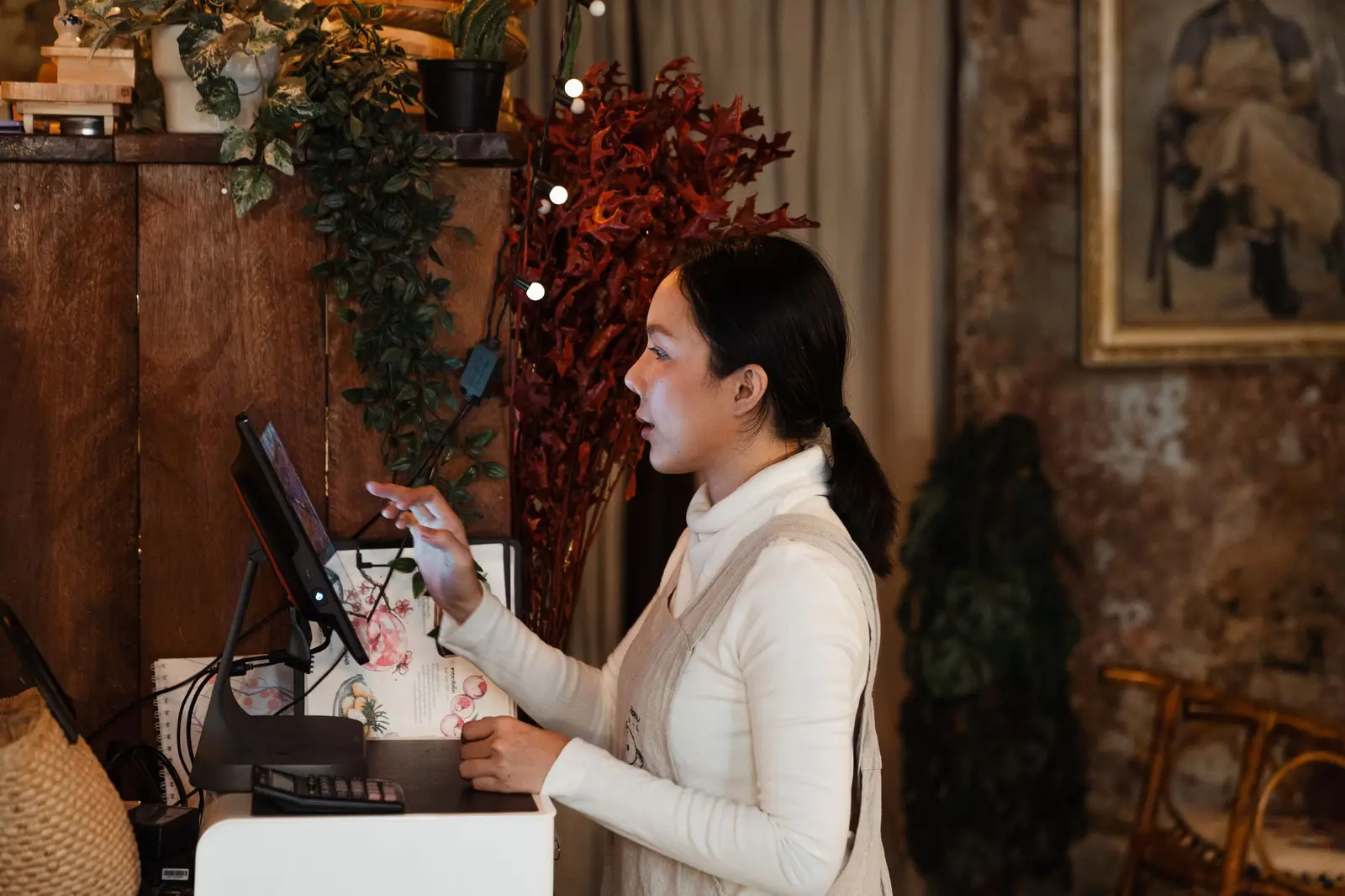
Restaurant cashier in an apron tapping a touchscreen point-of-sale terminal at a wooden counter
Your sales reports show which channel each order came from. That is where the per-order math starts. Photo: Ketut Subiyanto on Pexels.

The figures behind this guide

Seven numbers worth checking yourself

Each figure links to the page it was read from.

2.8%

Fullservice restaurants reported a median income before taxes of 2.8% of sales in the NRA's 2025 Restaurant Operations Data Abstract. The survey covered more than 900 restaurants.

Source: National Restaurant Association (August 20, 2025) · 2025
4.0%

Limited-service restaurants reported a median income before taxes of 4.0% of sales in the same NRA report.

Source: National Restaurant Association (August 20, 2025) · 2025
65¢

Prime costs (food, beverage and labor) were a median of 65 cents of every sales dollar in the limited-service segment.

Source: National Restaurant Association (August 20, 2025) · 2025
36.5%

Labor is the largest single operating expense: payroll and benefits were a median of 36.5% of sales in the fullservice segment.

Source: National Restaurant Association (August 20, 2025) · 2025
36%

The NRA estimates total expenses for an average restaurant jumped 36% between 2019 and 2026. Food and labor each take about 33 cents of every sales dollar, leaving roughly 5% before tax.

Source: National Restaurant Association: Inflation · 2026
15-30%

DoorDash's marketplace delivery commission ranges from 15% on Basic to 30% on Premier; pickup is listed separately at 6%.

Source: DoorDash Merchant Pricing (public site) · 2026
2.9% + $0.30

Stripe's standard online card processing fee is 2.9% plus $0.30 per transaction — the platform-agnostic baseline cost of accepting card payments online.

Source: Stripe Pricing · 2026

How we built this guide

Method and disclosure

Benchmarks from the survey first

Margins and cost shares come from the National Restaurant Association's public pages, read on October 30, 2026. Toast's and Restaurant365's ranges are shown beside them and labelled as theirs, because neither names a primary source.

Fees from each company's own page

DoorDash, Uber Eats, Grubhub and Stripe rates were read from their own pricing pages on October 30, 2026. No fee comes from a comparison site or affiliate list.

Who wrote this

The Orderitto team at INVASSO LLC in Parsippany, New Jersey. Orderitto sells online ordering websites and apps for restaurants, with zero per-order commissions. We use no customer's numbers on this page.

What the math leaves out

Ads, promotions, tablet fees, menu markups on the apps, taxes and tips. The $35 order, the 15% app share and the 5% starting margin are examples; your own reports will differ.

Built in Parsippany, New Jersey

Keep the margin on your regulars' orders

Orderitto builds online ordering websites and apps for independent restaurants. Orderitto does not take a per-order commission on direct orders. Starter is $799 setup and $149 a month; Pro is $1,299 setup and $249 a month. You pay Stripe's card fee, typically 2.9% + 30¢, on each order.

Keep running the numbers

Frequently asked questions

What is the average profit margin for a restaurant?

The National Restaurant Association's 2025 Restaurant Operations Data Abstract covers more than 900 restaurants. It puts the median income before taxes at 2.8% of sales for full-service restaurants and 4.0% for limited-service. The NRA's inflation page describes a pre-tax margin of roughly 5% for a typical restaurant. Toast and Restaurant365 both publish 3% to 5% for full-service and 6% to 9% for fast casual.

What is a good profit margin for a restaurant?

A useful test is whether you beat the median for your type. That means above 2.8% before tax for full-service and above 4.0% for limited-service (NRA, 2025). Toast's guide calls a net margin between 3% and 9% healthy for most independent restaurants.

What is the profit margin of a fast food or fast casual restaurant?

The NRA reports a 4.0% median income before taxes for limited-service restaurants, the group that includes counter-service, quick service and fast casual. Toast and Restaurant365 both publish a 6% to 9% range for fast casual and quick service, without naming a primary source.

What is the profit margin of a fine dining restaurant?

Toast publishes 4% to 9% for fine dining. Restaurant365 counts fine dining inside full-service, at 3% to 5%. The NRA's public summary does not split fine dining out from full-service, where the median is 2.8% before tax.

How do you calculate restaurant profit margin?

Net profit margin = net profit ÷ total sales × 100. Gross profit margin = (sales − food and beverage cost) ÷ sales × 100. Example: $1,000,000 in sales and $28,000 in pre-tax profit is a 2.8% margin. Use the same months for both numbers. For the net figure, include every cost: food, labor, rent, utilities, card fees and delivery app commissions.

What is prime cost, and what should it be?

Prime cost is food and beverage cost plus labor. The NRA's 2025 data puts the median at 65 cents of every sales dollar for limited-service restaurants. Toast calls keeping prime cost near 60% of revenue a widely used benchmark. Restaurant365 says food and labor together often take 60% to 70%.

Do delivery apps hurt restaurant profit margins?

On a typical cost split they can. Start from the NRA's roughly 5% margin. A $35 delivery order on a 25% plan costs $8.75 in commission. That is $7.43 more than a normal card fee, and more than four times the $1.75 profit. Pickup on DoorDash (6%) or Uber Eats (7%) still leaves a profit. DoorDash's own pricing page argues that many app orders are new business you would not get otherwise. That is the fair case for keeping the apps for discovery.

Does Orderitto take a commission on orders?

Orderitto does not take a per-order commission on direct orders. Its pricing page lists Starter at $799 setup and $149 a month, and Pro at $1,299 setup and $249 a month. You pay Stripe's card fee, typically 2.9% + 30¢, on each order.

Want to see what your own ordering site would keep?

Bring your menu and your app payout reports. In 15 minutes we will show how your ordering site would look and what it costs on Orderitto's flat plans.

Sources checked

  • NRA: 2025 Restaurant Operations Data Abstract (press release)Read October 30, 2026. August 20, 2025; data from more than 900 restaurants. Fullservice median income before taxes 2.8% of sales, limited-service 4.0%; limited-service prime costs a median of 65 cents per sales dollar; fullservice payroll and benefits a median of 36.5% of sales.
  • NRA: 2025 Operations Data Abstract (report page)Read October 30, 2026. Surveys of more than 900 restaurants; $99 for members, $199 for nonmembers.
  • NRA: Inflation is Straining Restaurant OperationsRead October 30, 2026. Total expenses for an average restaurant up 36% between 2019 and 2026; food and labor each about 33 cents of every sales dollar; other expenses including card fees about 29%; pre-tax margin roughly 5%; 5% of 2019 sales was $75,000; sales would need to reach $2,033,600, 36% above 2019, to keep 5%.
  • Toast: What is the Average Restaurant Profit Margin?Read October 30, 2026. July 28, 2026. Average 3-5%, range 0-15%; quick service, fast casual and food trucks 6-9%, full-service 3-5%, fine dining 4-9%; prime costs near 60% a widely used benchmark; 3-9% healthy for most independents; cites Restaurant365 for 3-5%.
  • Restaurant365: What is the Average Profit Margin for a Restaurant?Read October 30, 2026. Updated October 28, 2026. Full-service (including fine dining) 3-5%, fast casual 6-9%, catering 7-8%; food and labor often 60-70% of revenue. No outside source named on the page.
  • DoorDash Commission Rates & PricingRead October 30, 2026. Delivery 15% Basic, 25% Plus, 30% Premier; pickup 6% on every plan with pickup prices matching in-store; commission covers credit card processing; you can set different prices for delivery orders; "30% commission will kill my margins" FAQ.
  • Uber Eats PricingRead October 30, 2026. Marketplace Fee 20% Lite, 25% Plus, 30% Premium; 7% pickup with validated in-store pricing, 10% without; Lite 15% for delivery in New Jersey and other listed markets; Plus pays an extra 5% on Uber One orders; payment processing included in every plan; Uber Direct from $7.99 per delivery, and you set delivery fees on your own site.
  • Grubhub Pricing and FeesRead October 30, 2026. Marketing commission 5% Basic, 15% Plus, 20% All-access; Grubhub Delivery fees start at 10%; payment processing fees not included.
  • Grubhub Profit CalculatorRead October 30, 2026. Processing fee $0.30 + 3.05%, covering card processing and fraud monitoring.
  • Stripe PricingRead October 30, 2026. 2.9% + 30¢ per successful transaction for domestic cards.
  • Orderitto PricingRead October 30, 2026. "Orderitto does not take a per-order commission on direct orders." Starter $799 + $149/mo, Pro $1,299 + $249/mo; Stripe processing typically 2.9% + 30¢ per transaction.